What Is a Business Function Expert — and Does Your Company Need One?
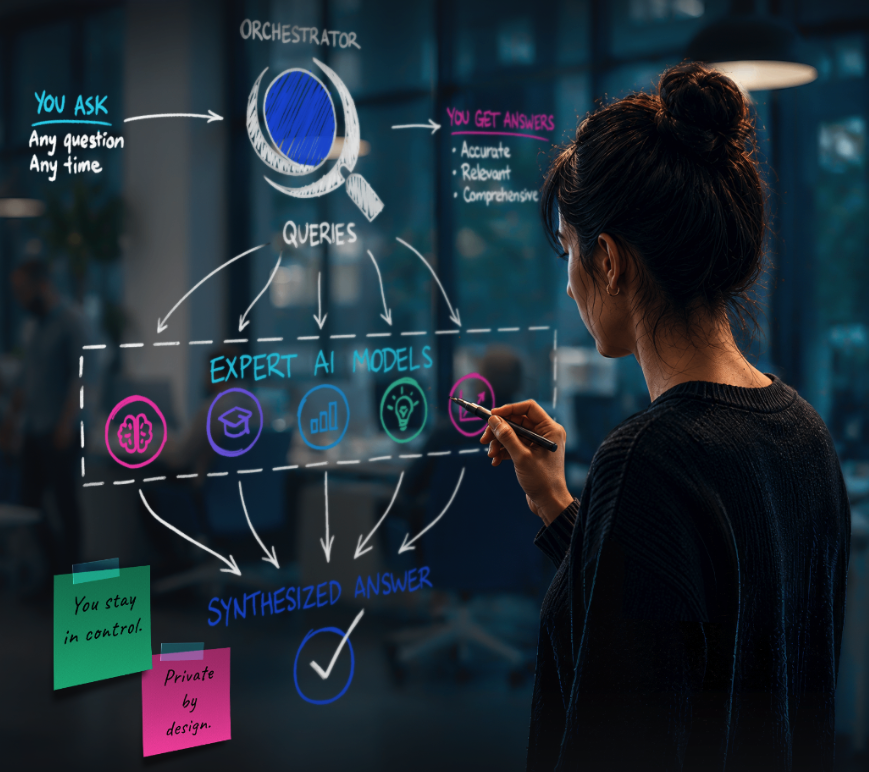
Business Function Experts are AI models trained for the specific knowledge domains that run your organization — from Revenue Ops to Legal & Compliance. Here's what they do and why they outperform general AI.
The Problem with General AI in Specialized Departments
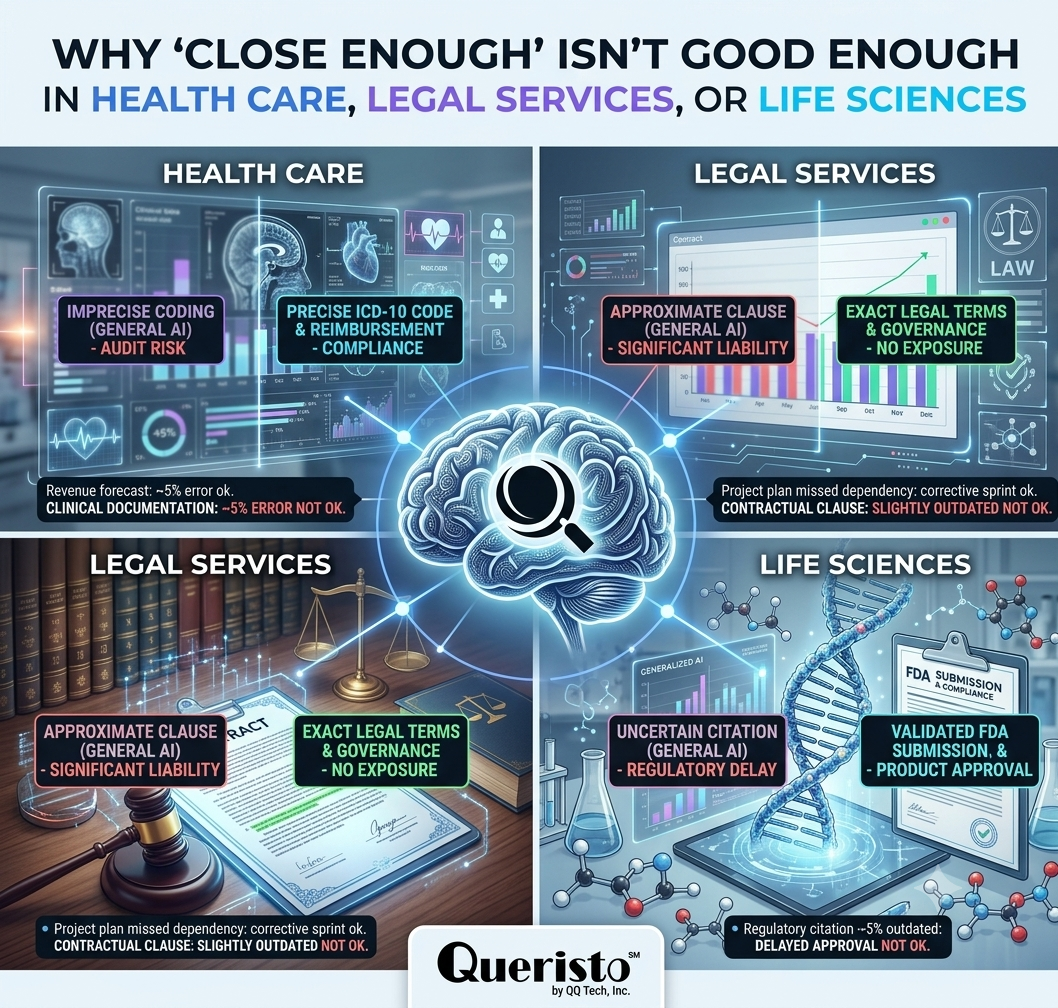
Ask a general-purpose AI model to summarize a news article, draft an email, or explain a business concept — and it does it reasonably well. Ask it to review a vendor contract for indemnification exposure, analyze a budget variance against prior-period actuals, or assess the implications of a new OSHA regulation on your HR policy framework — and the results become unreliable, fast.
This is not because the underlying model is poorly built. It is because the underlying model was not built for this. General AI is trained to be broadly useful. Business functions require precisely targeted depth.
That is the problem that Business Function Experts were designed to solve.
What a Business Function Expert Is
A Business Function Expert is an AI model fine-tuned on the parametric domain knowledge specific to a core organizational function. It does not just know that a function exists. It knows how it works — the terminology practitioners use, the frameworks they reason with, the regulations they operate under, and the decisions they make.
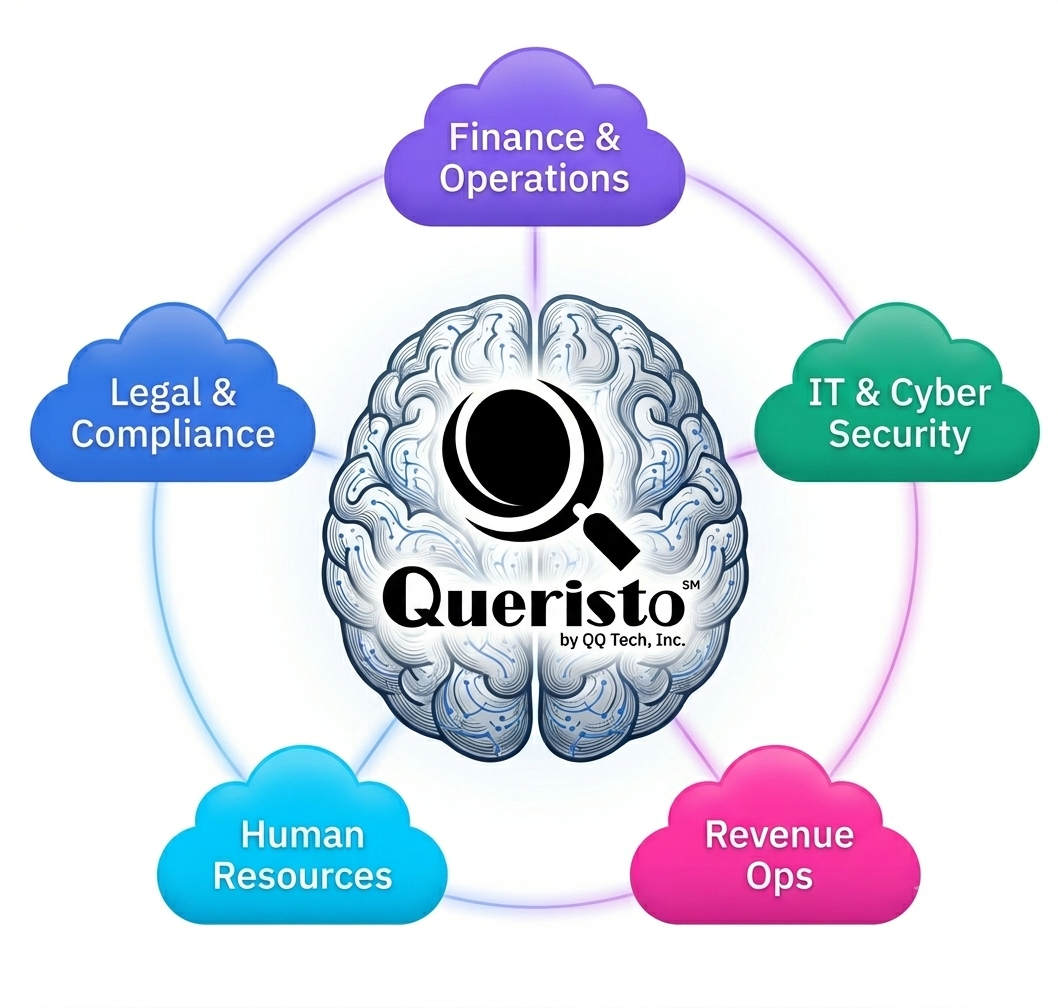
Each of Queristo's five Business Function Experts is designed for a distinct slice of organizational life:
- Revenue Ops: Sales, Marketing, and Customer Success
- Finance & Operations: Finance, Operations, and Project Management
- IT & Cybersecurity: Information Technology and Information Security
- Human Resources: Workforce Management and Services
- Legal & Compliance: Legal Affairs, IP, Governance, and Compliance
Some functions that might seem like obvious candidates — Public Relations, Facilities, Production Line — were intentionally excluded from the standard catalog. These functions either have smaller organizational footprints or lower exposure to the kinds of knowledge-work queries that AI handles well. If demand justifies development, they can be added. Until then, the Business Function catalog stays focused on where AI creates demonstrable, measurable value.
Revenue Ops: AI for the Functions That Drive the Business
The Revenue Ops expert was designed for the three functions that most directly determine whether a company grows or stagnates: Sales, Marketing, and Customer Success.
These three functions are grouped into a single expert because of the significant overlap in their parametric domain knowledge. The best sales organizations are fluent in marketing strategy. The best customer success teams understand the sales motion that brought customers in. The Revenue Ops expert understands all three — and the revenue-driving workflows that connect them.
What it helps with:
- Sales playbook and objection handling guidance
- Campaign performance analysis and optimization recommendations
- Customer health scoring and churn risk assessment
- Competitive positioning and win/loss analysis
- Customer success framework design and QBR preparation
Finance & Operations: AI for Structured, High-Stakes Reasoning
Finance and Operations teams deal with data that is precise, consequential, and often interrelated. A budget decision affects an operational timeline. A project delay affects cash flow. A capacity planning decision affects both.
The Finance & Operations expert understands these interdependencies. It is not just an AI that can read a spreadsheet — it is an expert trained in the logic that connects financial data to operational decisions, and both to project outcomes.
What it helps with:
- Budget variance analysis and narrative explanation
- Cash flow modeling and scenario planning
- Operational efficiency metrics and benchmarking
- Project status reporting and resource allocation guidance
- Vendor and procurement analysis
IT & Cybersecurity: AI for the Teams Holding Everything Together
Information Technology and Information Security were grouped into a single expert because the two functions have become inseparable at the operational level. Modern IT teams manage security posture. Modern security teams depend on IT infrastructure. The expert reflects this reality.
What it helps with:
- IT infrastructure documentation and architecture guidance
- Security policy drafting and review
- Incident response procedure guidance
- Vulnerability assessment frameworks
- Identity management and access control policy support
- Vendor risk evaluation frameworks
Human Resources: AI for the Most People-Intensive Function
HR manages the most complex and legally sensitive domain in any organization: the people who make it run. The HR expert is trained to understand workforce management in its full complexity — not just as a set of administrative tasks, but as a function with significant legal, ethical, and operational dimensions.
What it helps with:
- Employee handbook drafting and policy review
- Job description development and competency mapping
- Performance management framework design
- Benefits communication drafting
- Onboarding process documentation
- HR policy compliance questions (jurisdiction-aware with attorney review recommended for final decisions)
Legal & Compliance: AI for the Function Where Precision Is Non-Negotiable
The Legal & Compliance expert operates in the highest-stakes domain in the business function catalog. Legal affairs, intellectual property, governance, and compliance are areas where an imprecise answer is not just unhelpful — it can be actively harmful.
This expert is trained to reason carefully within the legal and compliance domain. It drafts, reviews, and flags — but it does so with the knowledge that all final legal determinations require qualified human review. Think of it as an expert research and drafting partner, not a substitute for counsel.
What it helps with:
- Contract review and clause identification
- Regulatory compliance checklist development
- Policy drafting aligned with governance frameworks
- IP documentation and trademark research support
- Compliance audit preparation and documentation
- Internal governance reporting
Does Your Company Need Business Function Experts?
Here is a simple test: think about the last five times someone in your organization searched for an answer to a work question. Where did they look? A shared drive? A colleague? Google? An existing (likely outdated) document? How long did it take to get a useful answer?
If the answer is "too long" — and it almost always is — you have a knowledge-retrieval problem that Business Function Experts are designed to solve.
The question is not really whether your company needs them. It is which ones to activate first, and in what order.
Recommended activation sequence for most organizations:
- HR — High query volume, well-documented internal knowledge, low risk of high-stakes error on non-legal questions
- Legal & Compliance — High value per correct answer, significant upside from deflecting routine compliance questions
- Finance & Operations — Strong ROI from automating repetitive reporting and analysis tasks
- IT & Cybersecurity — Critical for documentation, policy drafting, and ticket deflection
- Revenue Ops — High commercial value once fine-tuned on your sales and marketing assets
Start with the function where the knowledge gap costs you the most. Request a Panel Assessment and we will help you sequence your deployment for maximum early impact.
-custom-ai.png)